11 min read · updated 2026-05-20
Soft-story retrofit in Los Angeles: the complete 2026 compliance guide
LA Ordinance 183893 covers ~13,500 wood-frame soft-story buildings. Here's how to confirm if yours qualifies, what the retrofit actually costs, and how to keep your Certificate of Occupancy.
What 'soft-story' actually means
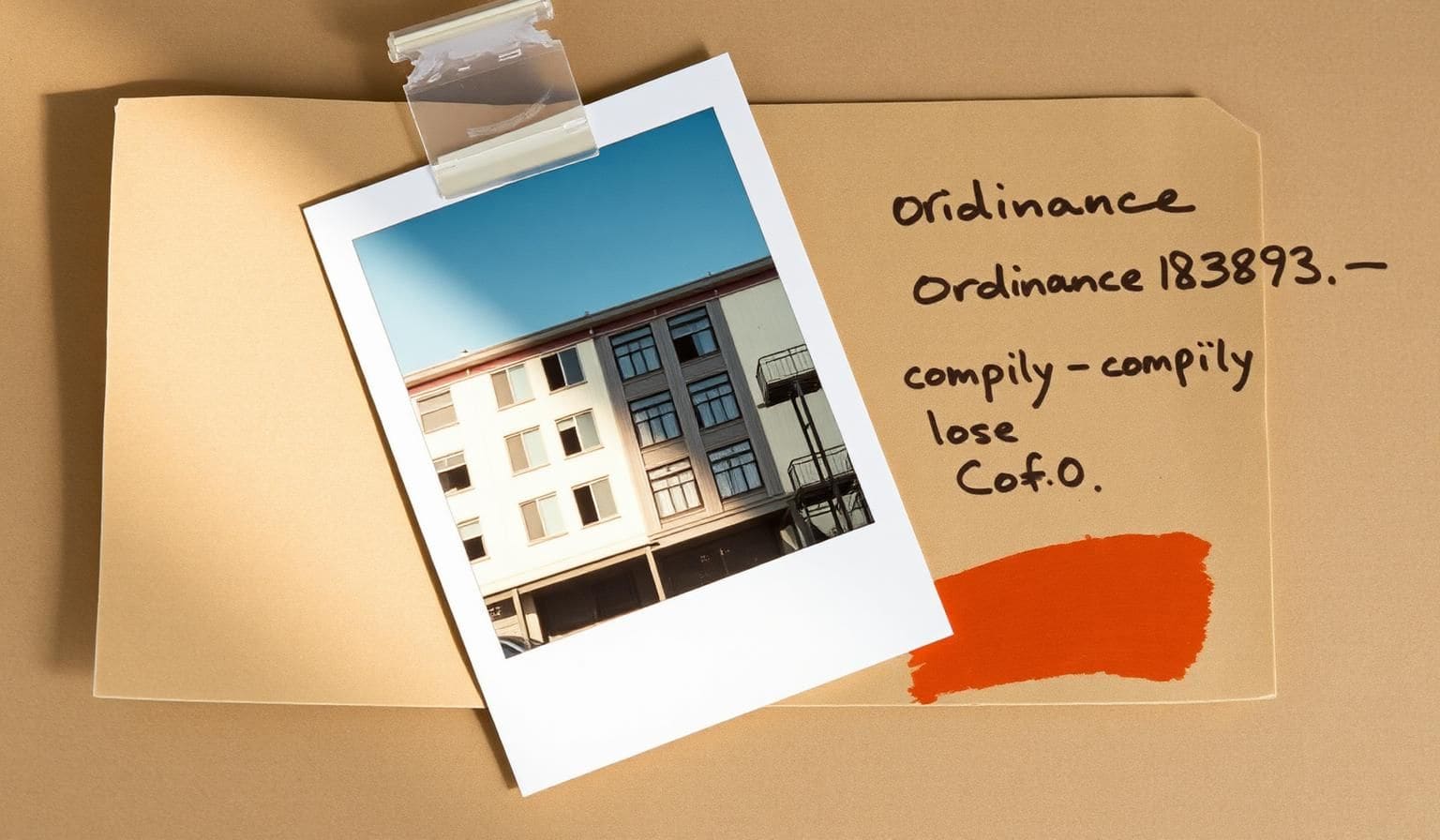
A soft-story building has a ground floor with significantly less lateral strength than the floors above — almost always because the ground floor is open for tuck-under parking or storefronts. In the 1994 Northridge earthquake, soft-story collapses killed 16 people in the Northridge Meadows apartments alone. LA's mandatory retrofit program, Ordinance 183893, was the city's response LADBS Mandatory Soft-Story Retrofit Program.
If your building was permitted before January 1, 1978, has two or more stories of wood-frame construction over a parking level or open ground floor, and contains residential units, it almost certainly fell within the program. LADBS sent compliance orders to ~13,500 buildings starting in 2015 and continues to enforce against non-responders Ordinance 183893 (full text).
How to confirm your building is covered
Pull the LADBS property profile for the address. The compliance order will be in the document history if one was issued. The Mandatory Earthquake Hazard Reduction filing fee receipt and any Engineer's Compliance Report submissions are also visible there LADBS property activity report lookup.
If you bought the property after an order was issued and the prior owner didn't disclose, you are still on the hook. LADBS doesn't forgive based on chain of title — the order runs with the building.
The retrofit options
There are three structural pathways most engineers use: steel special moment frames at the open wall lines, steel ordinary concentrically braced frames where wall space allows, and prefabricated cantilever column systems for parking levels that must keep cars rolling. Each has a different cost profile and a different impact on the parking spaces below.
Moment frames are the most expensive but the most accommodating — they leave the parking layout largely intact. Cantilever columns are the cheapest hardware but require a much more invasive foundation, since each column transmits the entire overturning moment to a new footing. SEAOC's structural guidance for retrofits is the standard reference SEAOC structural retrofit guidance.
Realistic 2026 cost ranges
We see complete retrofits land between $60,000 (small triplex over a two-car tuck-under) and $180,000 (16-unit building over a 12-car parking deck). The hardware is rarely the dominant cost; it's the shoring, the foundation work, the temporary tenant accommodations, and the architectural reweave at storefronts.
Soft-cost line items that catch owners off-guard: structural engineer fees (4–7% of construction cost), LADBS plan-check fees per the published schedule LADBS permit fee schedule, temporary tenant relocation when units are made unsafe during construction, and the cost of restoring stucco / siding cleanly after framing is exposed.
Cost recovery on rent-stabilized buildings
If the building is covered by the LA Rent Stabilization Ordinance, the owner can pass through 50% of the verified retrofit cost to tenants, amortized over 10 years and capped at $38/month per unit. The pass-through application goes through LAHD with documented invoices and engineer sign-off LAHD Seismic Retrofit Work Program (cost pass-through).
This pass-through is one of the few legitimate ways to increase RSO rents outside of the annual allowable increase. The administrative work is non-trivial — most owners use a Rent Adjustment Specialist or attorney for the LAHD filing.
What happens if you ignore the order
LADBS can revoke the Certificate of Occupancy, which makes the building legally untenable and unsellable in most cases. The city has also escalated to misdemeanor referrals on a small number of repeat non-responders. Lenders and insurers run their own checks and will increasingly decline both refinance and rebuilds on non-compliant soft-story properties.
Frequently asked
- How long does a typical retrofit take?
- From signed engineering contract to final inspection: 9–14 months for most LA buildings. Plan check at LADBS averages 12–18 weeks for a clean submittal, construction is 8–14 weeks, and inspections add the rest.
- Do tenants have to move out?
- Usually not permanently — but for 1–3 weeks during the most invasive framing work, tenants in directly affected units may need temporary relocation. LARSO requires the owner to cover reasonable accommodations.
- Can I sell the building before retrofitting?
- Yes, but the order travels with the property. The buyer assumes the obligation and most lenders will require completion before funding, or will hold back a retrofit reserve at closing.
- Is there any financing for the retrofit?
- LADWP has a Commercial Building Energy Efficiency loan that occasionally pairs with seismic. PACE (Property Assessed Clean Energy) financing through HERO or Ygrene historically funded soft-story retrofits — confirm current availability before counting on it.
- Where can I read more on ADU permits after "Soft-story retrofit in Los Angeles: the complete 2026 compliance guide"?
- The pillar hub is the field journal — filter by the ADU permits pillar. Definitions of the terms in this post live in the glossary.
- How does "Soft-story retrofit in Los Angeles: the complete 2026 compliance guide" translate to a real California project?
- See completed builds on the projects index, the full design-build sequence on the process page, and pricing bands in the 2026 California cost report.
- Which Alpha Dream studio covers my area for "Soft-story retrofit in Los Angeles: the complete 2026 compliance guide"?
- Los Angeles studio for LA, Orange, Inland Empire, and Ventura. Bay Area studio for SF, Peninsula, East Bay, South Bay, and North Bay.
- What's the fastest path from "Soft-story retrofit in Los Angeles: the complete 2026 compliance guide" to a quote?
- Run the ADU cost calculator for a band, then book a discovery call. We don't quote sight-unseen.
- Are the numbers in "Soft-story retrofit in Los Angeles: the complete 2026 compliance guide" verified against real bids?
- Yes — we publish from closed bids, not market averages. The full methodology is in the 2026 California cost report.
- Which California city does "Soft-story retrofit in Los Angeles: the complete 2026 compliance guide" apply best to?
- The post calls out its primary city; statewide context is on the locations index.
- Can I share "Soft-story retrofit in Los Angeles: the complete 2026 compliance guide" with my architect or designer?
- Yes — public content, attributable to Alpha Dream Construction. Pair it with the relevant field guides when you share.
- Does "Soft-story retrofit in Los Angeles: the complete 2026 compliance guide" replace a conversation with a contractor?
- No — it informs one. Book a discovery call to apply the post to your specific lot.
- Where do I find more posts on the same pillar as "Soft-story retrofit in Los Angeles: the complete 2026 compliance guide"?
- Filter by pillar on the field journal index. The topic clusters view groups posts with their related guides and city pages.
- Has the law changed since "Soft-story retrofit in Los Angeles: the complete 2026 compliance guide" was published?
- California ADU and remodel law shifts every session. Material changes get a new post on the journal; definitions update in the glossary.
- What's the related cost benchmark for "Soft-story retrofit in Los Angeles: the complete 2026 compliance guide"?
- See the 2026 cost report for city-by-city bands and the ADU cost calculator for an instant band.
- Can I cite "Soft-story retrofit in Los Angeles: the complete 2026 compliance guide" in a permit appeal or HOA letter?
- Yes — pair with the underlying statute. The permit directory links those sources.
Sources we cited
- 1.LADBS Mandatory Soft-Story Retrofit Program — LADBS
- 2.Ordinance 183893 (full text) — City of Los Angeles
- 3.LADBS property activity report lookup — LADBS
- 4.SEAOC structural retrofit guidance — SEAOC
- 5.LADBS permit fee schedule — LADBS
- 6.LAHD Seismic Retrofit Work Program (cost pass-through) — LAHD
Referenced resources
Permit portals, fee bands, and code notes that back up the jurisdictions named in this article.
Related areas
Neighborhood guides that pair with this article — local code, lot patterns, and what we've actually built nearby.
Westside — ADU Permits →
Local rules, costs, and project notes for Westside.
Area overview →Eastside / NELA — ADU Permits →
Local rules, costs, and project notes for Eastside / NELA.
Area overview →San Fernando Valley — ADU Permits →
Local rules, costs, and project notes for San Fernando Valley.
Area overview →